West St. Paul, MN · Dakota County
Basement Water Damage Restoration in West St. Paul, MNBasement Wall Drying & Emergency Basement Flood Cleanup
Basement Water Damage Restoration in West St. Paul runs from basement water extraction and basement floor water removal to basement dehumidification.
Answered 24/7
Local Basement Water Damage Restoration Near West St. Paul
A basement dries slower than any other part of a house. The air is cool, there is little sunlight and the concrete holds moisture for a long time. In West St. Paul, that makes extraction and steady dehumidification important.
Homes in West St. Paul and nearby South St. Paul, Mendota Heights and Inver Grove Heights with basements deal with seepage, plumbing leaks and sewer backups. Help with basement water damage restoration covers pumping, removal of wet materials and drying of walls and concrete.
Professional Basement Water Damage Restoration Offered in West St. Paul
Basement Wall Drying
Wet drywall is cut back above the water line when it is soaked, and the wall cavity and insulation behind it are dried or replaced.
Emergency Basement Flood Cleanup
Help is available any hour when water is rising in the basement from a burst pipe, a sewer backup or heavy rain.
Basement Mold Prevention
After drying, an antimicrobial can be applied to framing and concrete that were wet, to slow mold on surfaces that stay in place.
Basement Floor Water Removal
Wet carpet pad is removed from basement floors, since it holds water against the concrete and dries poorly.
Basement Dehumidification
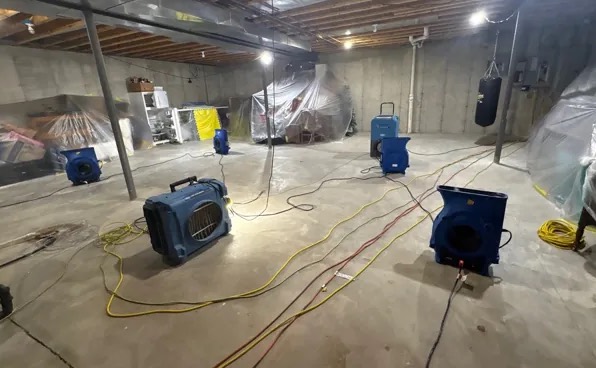
Large dehumidifiers pull moisture from the basement air so walls, framing and the slab can release their water.
How to Know You Need Basement Water Damage Restoration in West St. Paul
Peeling Paint or Wallpaper
Paint that peels or blisters on basement walls often has moisture behind it.
Standing Water in the Basement
Any standing water on the basement floor needs pumping right away, before it soaks walls and framing.
Sump Pump Failure or Overflow
A sump pump that runs constantly, fails to start or lets the pit overflow puts the basement at risk.
Warped or Buckling Basement Floors
Laminate, wood or vinyl flooring that buckles or lifts in the basement has water underneath.
How Basement Water Damage Restoration Works in West St. Paul
Step 1: Water Removal
Pumps and extractors remove standing water from the basement floor, starting at the lowest point.
Step 2: Targeted Moisture Evaporation
Air movers are aimed at wet walls, framing and the slab to speed evaporation.
Step 3: Humidity Control
Large dehumidifiers pull moisture from the basement air, with readings checked every day.
Step 4: Final Verification and Restoration
Final readings confirm the basement is dry, and the space is ready for drywall and flooring repairs.
Why Basement Water Damage Occurs in West St. Paul
Overland Flooding From Storms
Heavy storms and snowmelt can send surface water into basements through doors and walls.
Window Well Flooding
Window wells without drains or covers fill with rain and leak through basement windows.
Faulty Basement Waterproofing
Old or failed waterproofing on foundation walls lets water through during wet weather.
High Water Table and Hydrostatic Pressure
A high water table pushes groundwater up through the slab and into the joints between wall and floor.
Basement Water Damage Restoration for Homes and Businesses in West St. Paul
Residential Basement Water Damage Restoration
Finished basements used as living space need carpet, pad and lower drywall checked carefully. Soaked materials are removed so the walls and slab can dry.
Commercial Basement Water Damage Restoration
Businesses with below-grade storage need inventory moved out of the water quickly. Wet stock is separated and documented for insurance.
Professional Basement Water Damage Restoration or DIY in West St. Paul?
Sewage in a basement should not be cleaned up without gloves, boots and eye protection. For any backup through a floor drain or toilet, call local restoration pros.
What Influences Basement Water Damage Restoration Cost in West St. Paul
A basement pumped and dried right away in West St. Paul usually costs less than one left wet for days, when more drywall and flooring are lost.
Drying Time Required
Basements dry slowly, and longer drying means more equipment days and monitoring visits.
Material Saturation
Finished basements with carpet, drywall and insulation take more removal work than bare concrete.
Water Category
Clean water costs less to handle than sewage, which needs protective gear, removal and disinfection.
Does Insurance Cover Basement Water Damage Restoration?
Coverage for groundwater seepage and backups varies widely between policies. Ask your adjuster whether your policy includes it before work begins.
The Value of Local Pros for Basement Water Damage Restoration in West St. Paul
Structural Integrity Assessment
Walls, stairs and framing are checked for damage before work begins in the basement.
Water Type Handling
Clean water, gray water and sewage are each handled with the right protection and removal steps.
Mold Prevention Focus
Fast drying is the main way to limit microbial growth in a below-grade space.
24/7 Emergency Basement Water Damage Restoration for West St. Paul
A flooded basement damages walls, furnaces, water heaters and belongings quickly. Call (612) 688-3131 for basement water damage restoration in West St. Paul at any hour.
Call Now (612) 688-3131Basement Water Damage Restoration Near West St. Paul: Areas Served
Help with basement water damage restoration is also available in communities near West St. Paul, including South St. Paul, Mendota Heights and Inver Grove Heights, for flooded basements and sewer backups.
- Basement Water Damage Restoration in South St. Paul
- Basement Water Damage Restoration in Mendota Heights
- Basement Water Damage Restoration in Inver Grove Heights
- Basement Water Damage Restoration in Maplewood
- Basement Water Damage Restoration in Woodbury
- Basement Water Damage Restoration in Falcon Heights
- Basement Water Damage Restoration in Little Canada
- Basement Water Damage Restoration in Eagan
- Emergency Damage Restoration in 55107
- Fire Damage Restoration in 55107
- Mold Remediation Services in 55107
- Storm Damage Restoration in 55107
- Water Damage Restoration in 55107
- Water Leak Detection in 55107
- Emergency Damage Restoration in 55118
- Fire Damage Restoration in 55118
Basement Water Damage Restoration Common Questions Answered
Is basement floor water removal different from carpet extraction?
Yes. Bare concrete is squeegeed and dried, while carpet and pad need extraction, and the pad is usually replaced.
What causes the most common below-grade leaks in homes?
Sump pump failures, foundation cracks, clogged drain tile, sewer backups and burst pipes in the basement ceiling.
What does below-grade moisture removal include beyond pumping?
Extracting carpet and pad, opening wet walls, running air movers and dehumidifiers, and checking readings until dry.
Should I try below-grade waterproofing myself after flooding?
Sealing a small crack can be a DIY job, but drying must come first, and larger waterproofing work should go to a contractor.
What health risks come with delayed basement flood cleanup?
Standing water and wet materials can support bacteria and microbial growth, and sewage carries contaminants that need disinfection.