
Trusted by 180+ Homeowners
Structural Drying Services in Apple Valley, MN
- Over 180 5-Star Reviews
- Free Estimates and Quotes
- 100% Satisfaction Guaranteed
- Child, Family & Pet Safe Steps
- 24-Hour Emergency Service
- Fully Licensed & Insured
When Water Hides, You Need More Than Just Surface Drying in Apple Valley, MN
You notice it first as a subtle change. Maybe there’s a faint, unpleasant smell lingering in your basement, or perhaps the drywall feels slightly soft to the touch. You might even see a discolored patch spreading on your ceiling. This isn’t just standing water; it’s moisture that’s seeped deep into your home’s structure. Dealing with hidden water requires a specialized approach, and acting fast is crucial for your property.
Our local homeowners trust us when things get serious, and we’ve earned over 165 five-star reviews by getting it right. We understand the unique challenges water damage presents in the Twin Cities metro area. For structural drying, you need a team that knows how to tackle the unseen, preventing long-term issues like mold and rot before they take hold. Choosing the right help makes all the difference.
- We use advanced moisture detection tools to pinpoint exactly where water is hiding, ensuring no area is left untreated.
- Our targeted drying systems create precise environmental conditions to speed up the removal of deep moisture, protecting your home’s integrity.
- We focus on restoring your home’s structure, preventing secondary damage such as mold growth and material degradation.
The Science of Structural Drying: How We Get Your Home Dry
When water infiltrates your home, it doesn’t just sit on the surface. It wicks up into building materials, spreads behind walls, and settles in unseen cavities. Simply mopping up visible water is only the first step. Proper structural drying involves a technical process to draw that deep moisture out, preventing irreversible damage. We employ scientifically proven methods, not guesswork, to ensure your home is restored safely and effectively. Ignoring this can lead to costly repairs down the line.
Inspection and Assessment
Our technicians start with a thorough inspection using advanced equipment like thermal imaging cameras and moisture meters. This allows us to identify all affected areas, even those you can’t see. We’ll map out the extent of the water intrusion and assess the types of materials impacted to develop a precise drying plan.
Containment and Airflow Management
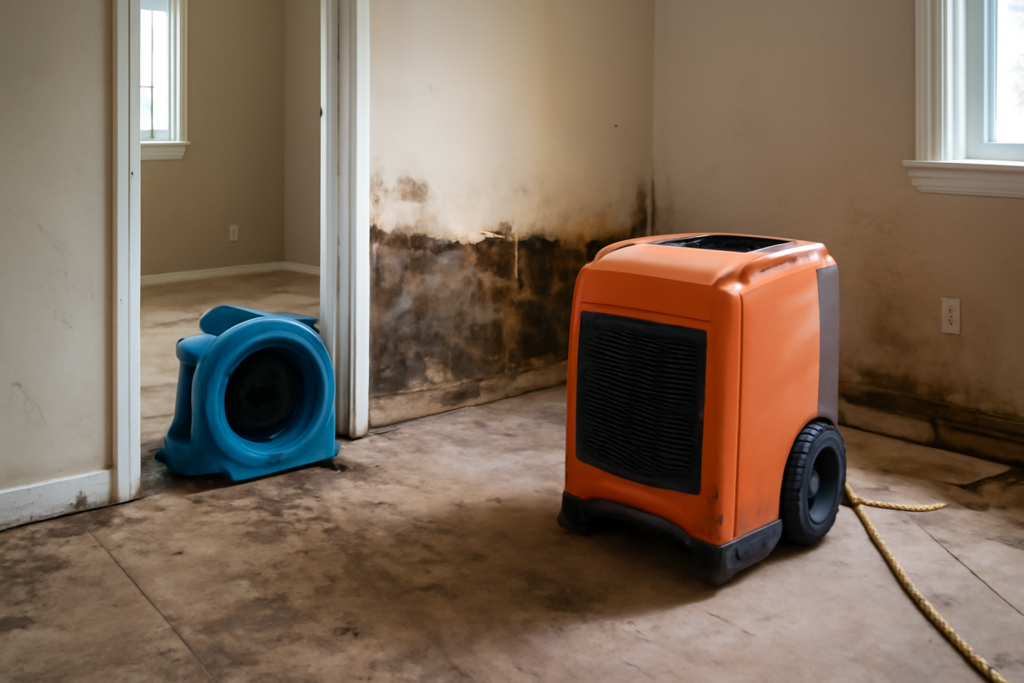
Once we know where the moisture is, we establish containment barriers to prevent cross-contamination. We then strategically position air movers and dehumidifiers to create optimal airflow and evaporation. This controlled environment is key to speeding up the drying process without causing further damage to unaffected areas.
Evaporation and Dehumidification
This is where the real work happens. We use high-capacity dehumidifiers to pull moisture from the air, while specialized air movers help speed up evaporation from porous materials. We monitor temperature, humidity, and moisture content closely, making adjustments as needed. Achieving proper dryness requires constant vigilance.
Monitoring and Verification
Throughout the drying process, we continuously monitor moisture levels in the air and building materials. We use calibrated equipment to ensure we reach industry-standard drying goals. Our goal is to verify complete drying before we consider the job done, giving you confidence in the restoration.
Post-Drying Procedures
After the structure is dry, we may recommend or perform final cleaning and deodorizing treatments. This ensures that any lingering odors are neutralized and the environment is healthy. We also conduct a final inspection to confirm your home is safe and dry.
Don’t wait for the visible signs of damage to worsen. Contact us today to begin the structural drying process. We’re ready to help restore your home quickly and efficiently.

Warning Signs You Need Structural Drying Services
Catching water damage early is essential. The longer moisture sits within your home’s structure, the more damage it can cause and the more expensive repairs become. Pay attention to these subtle indicators that signal hidden moisture and the need for professional structural drying. Early detection saves money and prevents bigger headaches.
Musty Odors That Won’t Go Away
A persistent, damp, or earthy smell, especially in basements, crawl spaces, or closets, is a strong indicator of trapped moisture. This odor often signals the beginning of mold growth, which thrives in damp environments. Investigate unusual smells immediately.
Soft or Spongy Flooring
If your carpets feel unusually soft or spongy underfoot, or if hardwood floors are starting to buckle or warp, moisture is likely trapped beneath them. This can compromise subflooring and joists over time. Don’t ignore changes in your floors.
Peeling or Bubbling Paint/Wallpaper
Moisture trapped behind walls can cause paint to peel or bubble away from the surface. Wallpaper may also start to loosen at the seams or develop blisters. This is a clear sign that moisture is compromising the integrity of your wall finishes. Look for signs of paint failure.
Discolored or Stained Walls and Ceilings
Water stains, often appearing as yellow or brown rings, are a visual cue that water has penetrated materials. These stains can spread and worsen if the underlying moisture source isn’t addressed. Check for new water marks.
Visible Mold or Mildew Growth
Any visible signs of mold or mildew, which can appear as fuzzy or slimy patches in various colors (green, black, white, orange), indicate a moisture problem that needs immediate attention. Mold can spread rapidly in damp conditions. Address mold growth promptly.
Warm Spots on Floors or Walls
When using thermal imaging, our team can detect temperature differences. If you notice areas that feel unusually warm to the touch, it might indicate a slow leak or moisture trapped behind surfaces, potentially affecting insulation or structural components. Be aware of temperature anomalies.
Structural Drying Services vs. DIY: When To Call a Professional
| Situation | DIY? | Call a Pro? | Why |
|---|---|---|---|
| Small spill on tile floor, quickly wiped up | Yes | No | Surface moisture dries quickly without special equipment. |
| Water in a finished basement after a minor leak | No | Yes | Moisture can hide behind walls and under flooring, requiring specialized detection and drying. |
| Dampness in a crawl space after heavy rain | Maybe (limited) | Yes | Difficult to access and ventilate properly; professional equipment is needed. |
| Leaking pipe causing wet drywall in a bathroom | No | Yes | Water can spread inside walls, requiring containment and targeted drying to prevent mold. |
| Flooded room from a burst pipe | No | Yes | Large volumes of water saturate materials deeply, needing powerful extraction and drying systems. |
| Persistent musty smell in a closet | No | Yes | Indicates hidden moisture and potential mold growth that needs professional assessment and remediation. |
For any situation involving water that has saturated building materials or is hidden from view, professional structural drying is essential. DIY methods are often insufficient to address the deep moisture that leads to long-term damage. Our trained technicians have the tools and expertise to handle these complex situations effectively.
Structural Drying Services Cost In Apple Valley, MN
The cost of structural drying in Apple Valley, MN, can vary significantly based on several factors. These include the total square footage affected, the depth of water saturation, the types of materials involved (e.g., drywall, insulation, wood), and the duration of the drying process. Accurate pricing requires assessment. These ranges provide an estimate for services in the area.
| Service Aspect | Typical Price Range | What Affects Cost |
|---|---|---|
| Initial Inspection and Moisture Assessment | $300 – $800 | Complexity of the intrusion, size of the affected area. |
| Containment Setup and Air Management | $500 – $1,500 | Size of the contained area, number of air movers required. |
| Dehumidification and Drying Equipment Rental | $700 – $3,000+ (per week) | Number and type of dehumidifiers, duration of drying period. |
| Specialized Drying for Cavities and Structures | $1,000 – $4,000+ | Accessibility of affected areas, extent of saturation within walls or floors. |
| Monitoring and Final Moisture Verification | $400 – $1,200 | Frequency of checks, size of the property, complexity of materials. |
| Odor Control and Antimicrobial Treatments | $300 – $1,000 | Severity of odor, need for specific treatments. |
These figures are general estimates. A thorough on-site inspection is necessary to provide you with a precise quote for your specific situation. We offer free estimates to help you understand the scope and cost involved.
Service Areas Near Apple Valley, MN
Lakeville, Burnsville, Eagan, Savage, Prior Lake, Farmington, Rosemount, Inver Grove Heights, Mendota Heights, West St. Paul, Hastings, Bloomington, Edina, Richfield, St. Louis Park, Hopkins, Minnetonka, Eden Prairie, Shakopee, Jordan.
Common Questions About Structural Drying Services
What’s the difference between water damage cleanup and structural drying?
Water damage cleanup typically refers to the removal of standing water and drying of surface materials. Structural drying is a more intensive process that focuses on extracting moisture hidden deep within your home’s structure – behind walls, under floors, and within insulation. Our team uses specialized equipment and techniques to ensure all moisture is removed, preventing long-term issues like mold and rot that surface drying alone can’t solve.
How long does structural drying usually take?
The timeline for structural drying can vary significantly, typically ranging from a few days to several weeks. Factors like the extent of water saturation, the types of building materials affected, and ambient humidity levels play a big role. We monitor progress daily to expedite the process safely and efficiently, aiming to restore your home as quickly as possible.
Is structural drying covered by homeowners insurance?
In most cases, structural drying resulting from sudden and accidental water damage, like a burst pipe or appliance malfunction, is covered by homeowners insurance. However, damage from gradual leaks or floods might have different coverage. We work with insurance adjusters to document the drying process and ensure all necessary steps are accounted for, making the claims process smoother for you.
What are the health risks of not performing structural drying?
If moisture remains trapped in your home’s structure, it creates an ideal breeding ground for mold and bacteria. Inhaling mold spores can lead to various health issues, including allergies, respiratory problems, and other adverse reactions. Preventing mold growth is a primary goal of proper structural drying, ensuring a healthy living environment for your family.
Can I do structural drying myself after a leak?
While you can handle minor surface water cleanup, true structural drying requires professional expertise and equipment. Standard fans and dehumidifiers may not reach deeply saturated materials or effectively control humidity levels. Our technicians use industrial-grade equipment and advanced monitoring tools to ensure complete drying, which is crucial for preventing hidden damage and mold development in your Apple Valley, MN home.
Check Our Other Relevant Services
Serving Apple Valley, MN And Nearby Areas



